


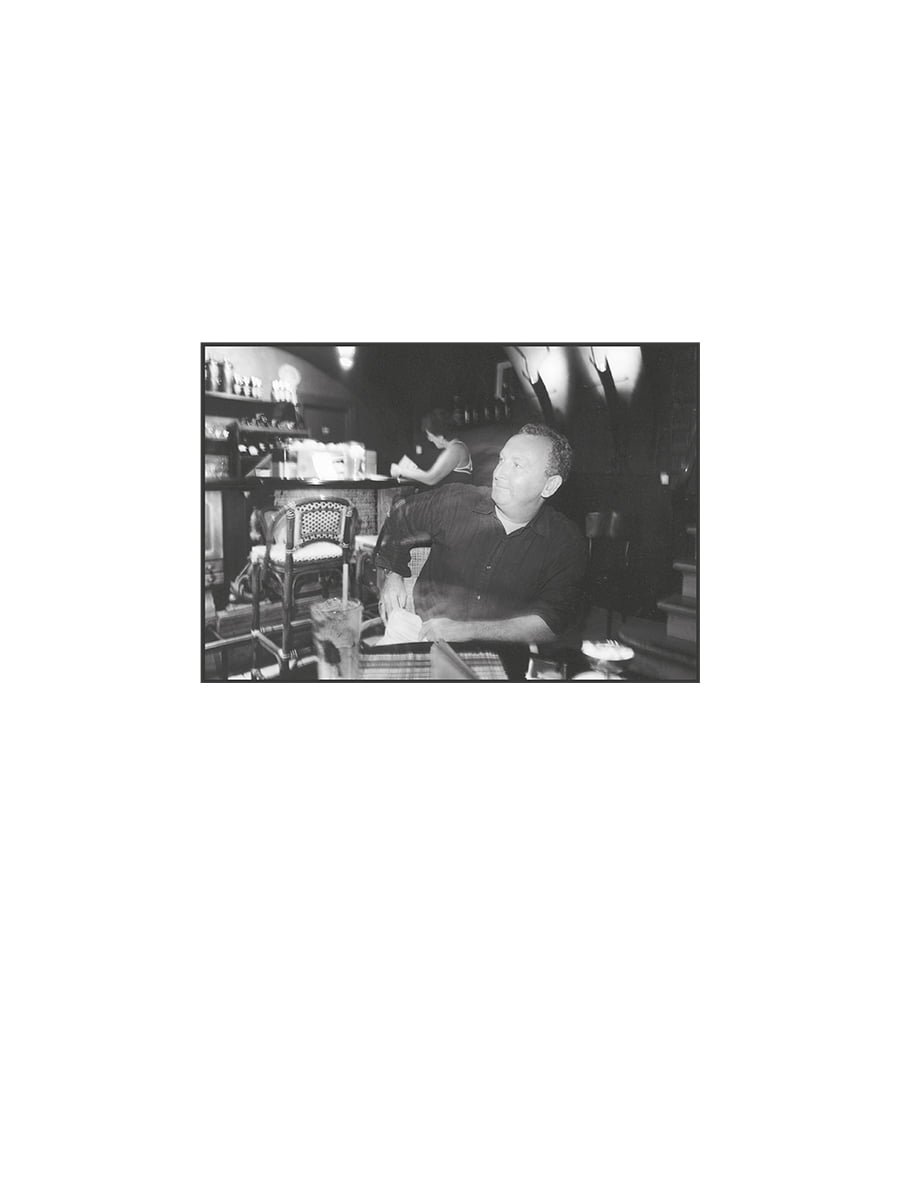
Von Donal McLaughlin - Liebe BernerInnen & Nicht-BernerInnen, die Artikel, die ich ein halbes Jahr lang für ENSUITE schreiben kann, sollen in englischer Sprache verfasst werden. Nachdem ich aber Ihre Sprache, bzw. die hochdeutsche Variante beherrsche, möchte ich mich zumindest auf Deutsch vorstellen. Diese kleine Geste sei mir erlaubt.
Ich heisse Donal McLaughlin, stamme ursprünglich aus Nordirland, lebe aber seit 34 Jahren in Schottland (wo ich als Kind ankam), gelte als irischer Schotte, bin als Autor, Übersetzer / Dolmetscher & Herausgeber tätig – und bin seit Anfang Februar in der Schweiz, und zwar als der allererste Scottish Writing Fellow der Stadt Bern.
Wer weiss, was ich in meinem halben Jahr hier für ENSUITE und sonst so alles schreiben werde, aber heute geht’s los mit einem Überblick über die zeitgenössische schottische Literatur – und ein paar Worten zu meiner bisherigen Leseerfahrung, zumindest was die Schweizerische anbelangt.
Im April bekommen Sie dann meine ersten Berner Eindrücke zu lesen!
Scottish Writing
The last two decades of last century gave rise, in Scotland, to what critics & reviewers were quick to call a literary renaissance, with Alasdair Gray’s Lanark (1981) rightly viewed as the major milestone which marks the beginning of the boom.
The renaissance, it is often suggested, had its roots in political setbacks. In the wake of both the failed referendum on devolution in the spring of 1979 & Margaret Thatcher becoming Prime Minister that autumn, Scotland’s writers – like their filmmaker, painter & musician colleagues – invested in their art, rather than succumb to the double whammy delivered by the political arena.
These political disappointments are not to be underestimated. Many writers & artists had helped campaign for devolution – but while the majority of citizens who voted voted YES, the 40% hurdle, introduced by the then Labour government, was not cleared. The general election result later the same year soon meant Scots were experiencing what poet Norman MacCaig famously called ‘the indifference / of a remote and ignorant government’. As huge Labour majorities in every election between 1979 and 1997 reflect, Scotland consistently & unambiguously rejected the Conservative government of that era.
The very considerable fruits of the artists’ response to this state of affairs soon gave rise to the theory that Scotland had achieved cultural (if not political) independence. Politics, Cairns Craig even suggested, had been reduced to a mere side-show in Scotland. It might nonetheless be argued that the cultural confidence inspired & instilled over two decades by those selfsame artists bore political fruit when, in September 1997, in the referendum promised by the newly elected New Labour government, Scots emphatically said YES both to Devolution, and to higher taxes to pay for it. The country, as a result, now has its own Parliament again.
Those observers who identify a literary renaissance in Scotland tend to focus primarily on the country’s novelists & shortstory writers. Whether such commentators live & work in Scotland itself, or look on from their London bases, or even from continental Europe and beyond, the consensus seems to be that it all started in Glasgow with a group of writer friends – James Kelman, Tom Leonard, Alasdair Gray, Bernard Mac Laverty & Liz Lochhead – who’d met at a writer’s workshop at Glasgow University in the 1970’s. (Leonard & Lochhead, it should be noted, are poets; Lochhead, the only woman, has the closest contact with the theatre world.) Kelman, having seen how Leonard used the everyday language of Scotland in his poetry, began to use language in similar ways in prose. Gray, too, became known for the Scottish rhythms in his syntax. United in their rejection of T.S. Eliot’s notion of ‘The Voice of Literature’, these writers set out to use a whole palette of voices in their work; to show what could be expressed using the language and voices of ordinary people round about them; to show that it was possible to write literature in the language of their community.
Such democratisation of literature was to find expression in other ways, too. To overcome the elitism associated with literature, writers strove to take literature out of the classrooms, the universities, the sometimes forbidding libraries. Readings were held in outlying districts, and workshops created to encourage people to write. From such workshops emerged, in due course, writers such as Agnes Owens and Jeff Torrington.
The example of these writers in the West of Scotland triggered further success – both there & elsewhere. In Glasgow itself, in the late 80’s & early 90’s, two major female writers emerged: Janice Galloway & A L Kennedy. Aspiring writers elsewhere in Scotland followed suit, learning from e.g. Kelman’s work. In the East, in Edinburgh, Irvine Welsh produced Trainspotting (1993). Similarly, Duncan McLean, from the North-East, used language and settings from that area in his work. And in the second half of the 1990’s, Alan Warner did the same for the North-West in novels such as Morvern Callar (1995) and The Sopranos (1998). In sharp contrast to the decades before the 80’s & 90’s, new writers, it seemed, were emerging all over Scotland.
The plaudits & prizes rolled in. One measure of recognition came in the form of nominations for the Booker Prize for Fiction, the major annual literary award in the UK. James Kelman was nominated for A Disaffection in 1989, before taking the prize in 1994, with How Late It Was, How Late. Authors such as George Mackay Brown, Bernard Mac Laverty, Ali Smith & Andrew O’Hagan have also since been shortlisted. Column inches devoted to Scottish fiction in the London & New York press, in addition to academic studies & translations produced around the world, also testify to the significance & stayingpower of this renaissance. More tellingly & encouragingly still, now that literary Scotland is more confident of its own voice, the voices of Scotland’s minorities are beginning to be heard, as demonstrated by publications, initially in literary magazines & anthologies, by Irish Scots, Asian Scots, & Italian Scots. An even more vibrant literary scene is the result, with authors such as Des Dillon, Leila Aboulela & Suhayl Saadi publishing book after book & garnering much praise.
Fiction writers, of course, do not enjoy a monopoly on success. From the 1990s onwards, their poet colleagues, too, have been shortlisted for, and won, major literary awards – with Kathleen Jamie, John Burnside & Don Paterson leading the way. To make this observation is in no way to underestimate the contribution of older generations; the oeuvres of men such as Norman MacCaig, Sorley McLean, Iain Crichton Smith & Edwin Morgan. Nor should the generation of poets now in their early fifties be overlooked: Brian McCabe, Dilys Rose, Andrew Greig, Ron Butlin (all Edinburgh writers). Two volumes of the poetry of younger generations augur well for the future: the original Dream State anthology of 1994; and the expanded second edition of 2002. What’s more: the Scottish Poetry Library (my idea of heaven) now has a beautiful new building, next to the Parliament. And as of 16 February 2004, Scotland has its own Poet Laureate – its Scots Makar – in the much-loved Edwin Morgan.
The one puzzle in all of this is why playwrights appear not to share the profile & status enjoyed by their poet and novelist colleagues? The success of writers such as David Harrower (Knives in Hens) & Gregory Burke (Gagarin Way) – to name but two, much translated & staged abroad – is surely changing that. The recent success (one hopes) of the campaign for a National Theatre should also give the stage in Scotland a much needed boost.
In short, there’s no doubt about it: for twenty-odd years now, a great deal’s been happening, in literary terms, in Scotland. Some will challenge the term renaissance. Others balk at talk of ‘Scottish literature’, disputing – rightly – the existence of such a (single) beast. What of middle-class experience? still others object, irritated by the focus on working-class writers. Others still will contest the dominance of Glasgow; or prefer to focus on work in Scots & Gaelic. Fair enough. But there’s one thing I do know for sure: it’s been an honour & privilege to live through this period; to follow the progress of the many & varied writers; & join their audiences for many a memorable reading.
Websites:
www.contemporarywriters.com
www.scottishbooktrust.com
www.spl.org.uk (Scottish Poetry Library)
www.a‑l-kennedy.co.uk
www.tomleonard.co.uk
www.edwinmorgan.com
www.suhaylsaadi.com
Swiss Writing
To what extent do Scots know Swiss writing? you might wonder. At the University of Strathclyde (Glasgow), there exists a Centre for Swiss Studies, the remit of which, I understand, covers French‑, German- & Italian-speaking Switzerland. Beyond academia, people, I suspect, would at most be aware of Frisch & Dürrenmatt though Tom Hubbard’s recent issue of the magazine Fife Lines has done something to counter that (‘Poetry in Switzerland’, Autumn 2002).
My own awareness is restricted to authors writing in German. My application for Bern mentioned cautiously, I recall knowledge of “Swiss writing, and even – to a degree – some work from Bern”. Closer inspection of Berner Texte (2002) & the Berner Almanach (1998) reveals to my surprise that Bern’s associated with a number of writers, examples of whose work I know: F.D. (sowieso), Kurt Marti, E. Y. Meyer, Verena Stefan, Beat Sterchi, Franco Supino, & Christian Uetz. By the end of six months, needless to say, I aim to be more bewandert..
Further recommendations are already beginning to reach me: Lukas Bärfuss, Martin Frank, Christoph Geiser, Raphael Urweider, to name but four. I begin with Die toten Männer (‘Danielle hat neulich gestanden’ etc), my head translating as I read, and a recent suspicion resurfaces. Who knows, I find myself musing: a Swiss anthology – or new translations – might well be in the cards here.
© Donal McLaughlin
Bild: Martin Zelmenis, Riga
Publiziert: ensuite Nr. 3, März 2004


